Uncategorized

2025/08/24 2025/08/24

What are backlinks, and are they still important when improving organic SEO?

By |Categories: Uncategorized|Tags: |Comments Off on What are backlinks, and are they still important when improving organic SEO?


Written by: Ryan Walsh

What are backlinks?

Backlinks, in short, are when another website directs a hyperlink towards your domain name. This could be featured on the homepage, a blog post, or a main page. The more quality links accumulated over time, the more links are added to your business’s backlink profile.

The businesses in the U.K. with the strongest backlinks are typically the ones that rank in the top three results on Google. Now, of course, the other search engine optimisation elements need to be good quality as well; for example, the content marketing will need to be very high quality.

However, good links usually are what drive any business up the ranks on Google.


Are backlinks still that important?

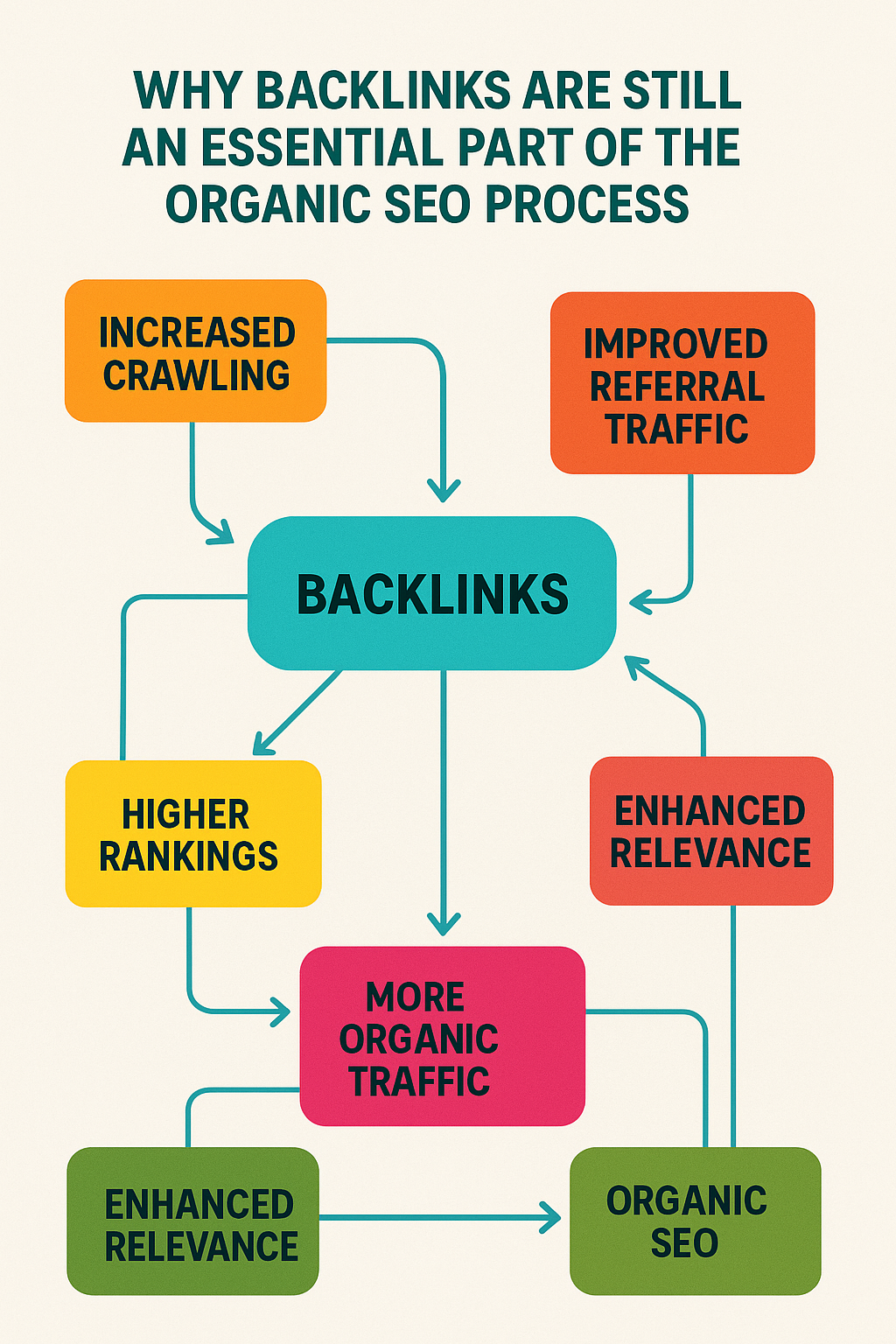
Backlinks are still an essential part of organic search engine optimisation. However, as we now move into this new era of AI and AI search, we are unsure at the time of writing how important backlinks will be in terms of how AI ranks businesses. However, for the time being, when talking about organic search engine optimisation, backlinks, and having a strong backlink profile are still very important.


Does the number of backlinks matter?

Yes, whether we are talking about backlink building in 2025 or whether we are talking about backlink building during the days when Google used Google PageRank as the algorithm to rank websites, backlinks were always important.

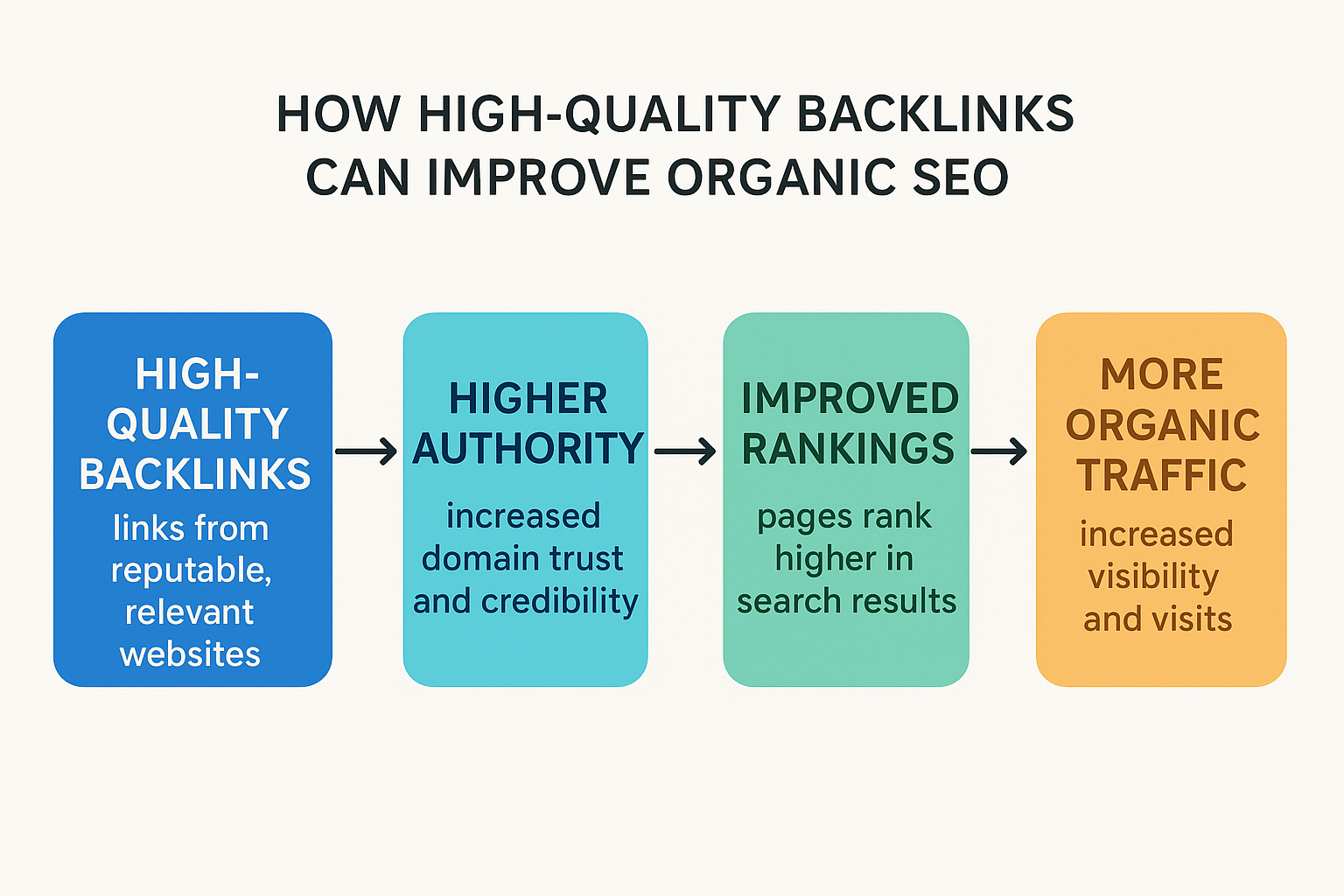
In a nutshell, if a business wins a business award and accumulates backlinks from reputable sources like the BBC, Wales Online, and The Guardian newspaper online, mentioning the product innovation award, linking to your business can significantly boost your organic search engine optimisation.

In terms of Google’s search ranking factors, how important are backlinks?

As most good SEO agencies know, there are now in excess of 200 ranking factors. Now, backlinks, or links for short, are the most critical ranking factor that Google’s algorithm uses to decipher how strong or weak a business’s SEO is.

In a nutshell, if a business has powerful backlinks and good on-page SEO, then it’s more than likely going to rank higher on Google.

Therefore, regardless of the business sector, whether you’re a plumber or a solicitor, usually the businesses ranked right at the top of Google’s organic results will be those companies which have the strongest and highest quality backlinks.

Are all backlinks worth the same?

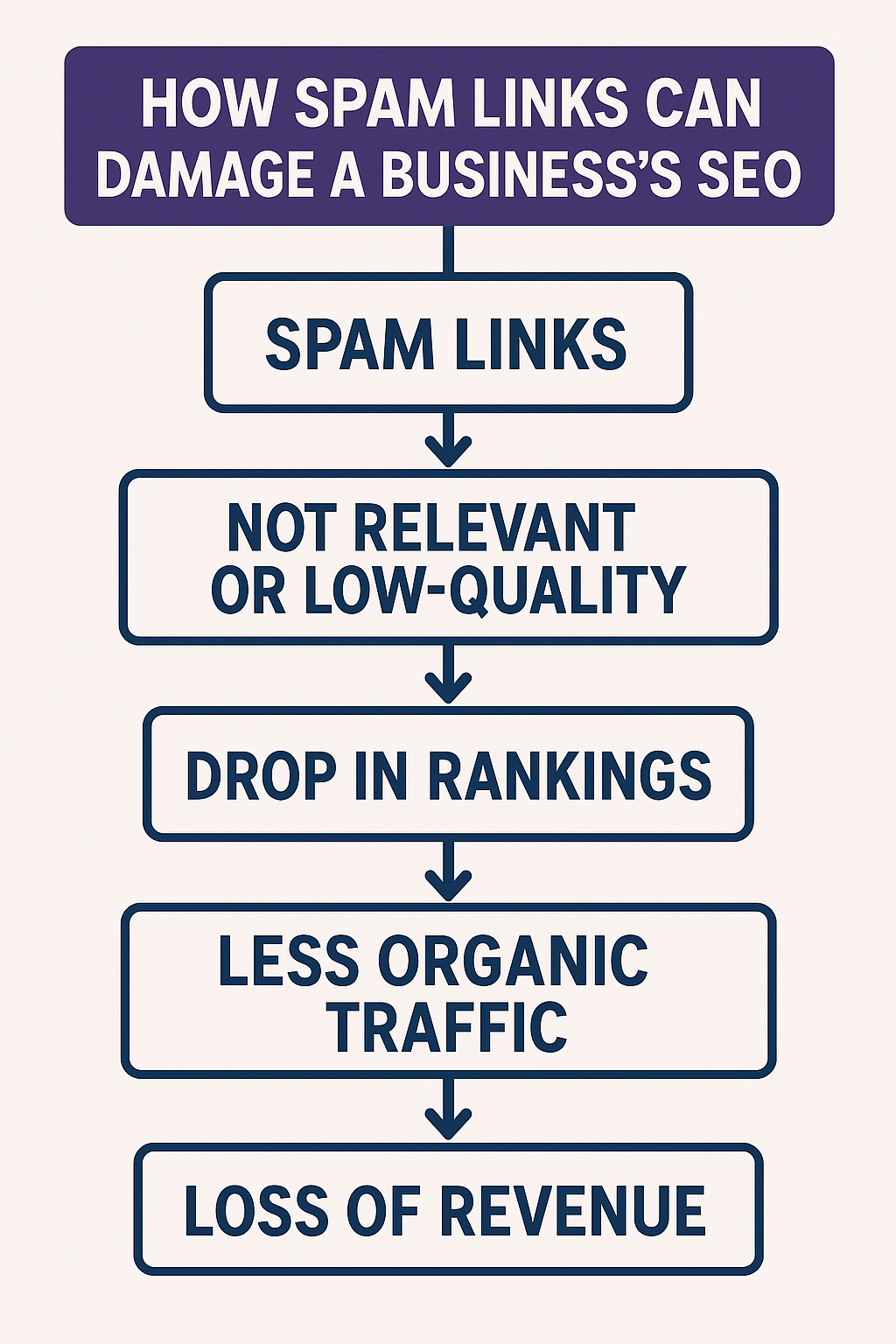
Most definitely not; some backlinks, such as a good link from the BBC, can have a massive and dramatic uplift in terms of where the company ranks. For other links, such as spam links, this can actually move the business down a few places. In fact, accumulating too many spam links can result in a link penalty.


What’s the difference between a dofollow and a nofollow backlink?

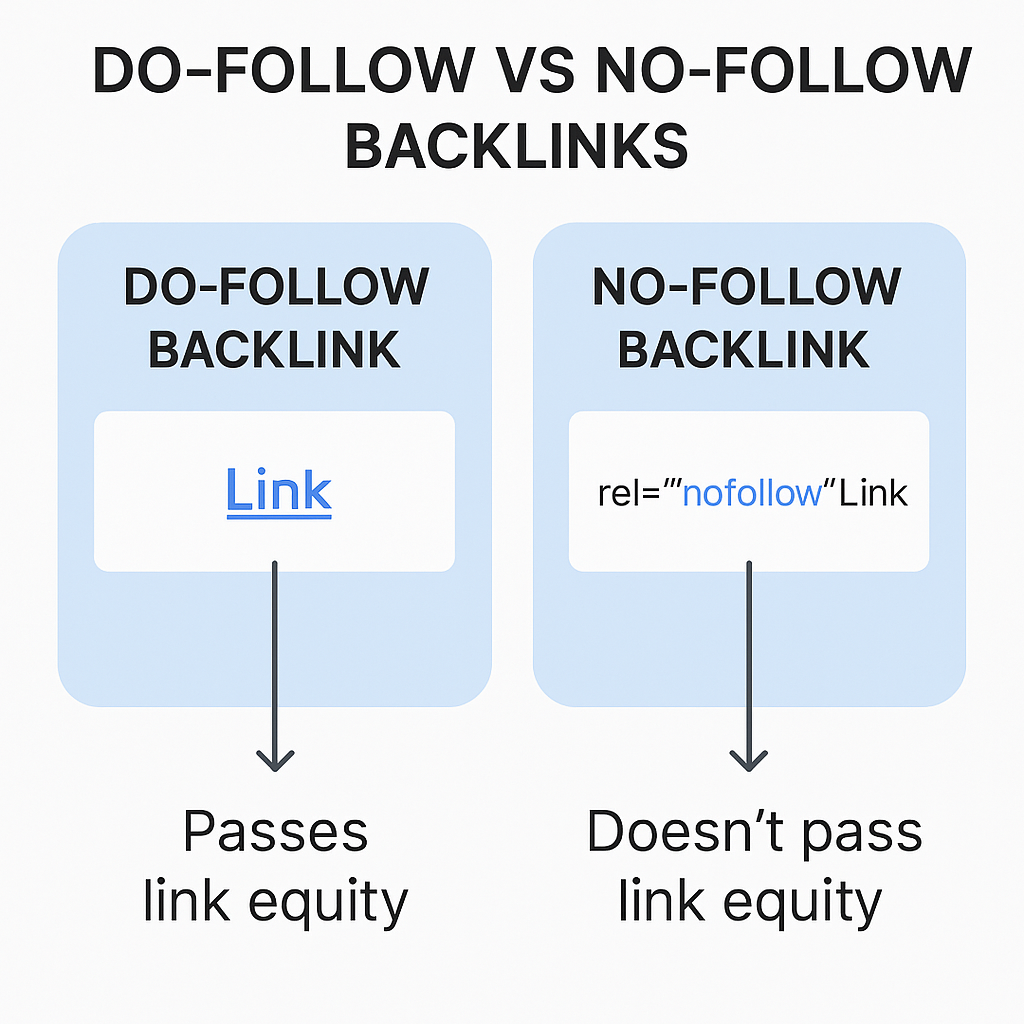
The difference between a do-follow and a no-follow backlink is relatively simple: one passes SEO goodness known as link equity, and the other doesn’t. To supercharge your business’s organic search engine optimisation, you need good links that pass link equity.

No-follow links are not worthless; they are still worth accumulating. The reason is that they can enhance your business’s backlink profile and overall search engine optimisation. The reason is that having a lot of quality websites that link to you, whether do-follow or no-follow, is still a sign that the website has decided to link to you.

If several high-quality websites, such as the BBC, link to you, it’s a sign to Google’s algorithm that your content marketing is of high quality.

Google’s perspective is straightforward: if the BBC decides to link to you, it’s likely because you offer high-quality content marketing or are an innovative company that has achieved notable recognition, such as winning a business award.


How do you go about building good-quality links?

Regardless of which type of business you run, whether your best solicitor in a pin-stripe suit, or your best hairdresser sliced bread, to rank at the top of Google, your business is going to need a lot of links.

When you place your direct competitors’ websites into a good backlink checking tool, and try Moz Pro, it’s fantastic and one of the best on offer.

Then, using the backlink checking part of the website, you can see that your competitors who are currently ranking number one on Google will generally have good quality links. Typically, businesses that rank at the top of Google or Bing will have over one hundred quality links.

For competitive business sectors, let’s say your business sells legal services across the U.K.

Your business will be competing against thousands of other solicitor practices, so your business backlinks must be superior in every possible way. You will often need thousands of quality links. This is where a top-quality agency is usually required to improve the SEO substantially.


What does link-worthy content marketing even mean?

Regardless of the question the customer has, there are often thousands of businesses that have also answered that exact question. The reason is that they want the shopper to land on their piece of content marketing, which offers an answer to that question.

Then they can direct that shopper to a page where they can buy a product from them.
Content marketing is, therefore, a way of bringing shoppers to the company website.

However, for that piece of content marketing to even get close to page one of Google, you must have a lot of high-quality links.


And how do you get those good-quality links?

Well, your business must offer a superior, more detailed, and better answer than the competition.
If the competition has written 700 words which are boring to read, nobody is going to want to link to that work.

However, if you write 2000 words and have an expert in a YouTube video explaining the benefits of that product, the website is likely to have a low bounce rate.

Then you can cram the page with as much valuable and helpful advice as possible. This will decrease the bounce rate and also sometimes substantially increase the dwell time. Plus, because you’ve offered good advice, it’s clear as day that you have put a lot of effort into creating that page, and other businesses may link to you.

Now you may well be scratching your head, thinking, “Well, why would other businesses want to link to us?”

Well, because quite simply put, those other businesses may not be your competitors. For example, let’s say that you make and bake the wedding cakes. And you may have a partnership with a local hotel, where if you refer them, you get a commission. Therefore, on your wedding cake website, you may offer a link to an exclusive, luxury hotel where you know you send your customers to have a great day. Plus,

you have sent out a link, which also helps improve the hotel’s SEO.


What is link velocity?

Link velocity is simply a measure of how quickly your business is accumulating links. Is your business accumulating the links super fast?

Or are you accumulating the links very slowly?

When you have a chat with a leading SEO agency, they will always tell you that an ideal world is one where you accumulate links slowly and steadily.

If your business accumulates too many links too quickly over a month or two, it can appear as if you’re buying links. Google doesn’t want you to buy links; it wants your business to earn links slowly over a long period.

If businesses are buying links, they are ignoring Google’s rules.
It is then perfectly possible that the business will incur a link penalty. When you chat to any good SEO company that’s worth its salt, they will tell you that bad links, spam backlinks, can mean that your website disappears from Google. Getting back can be arduous work, slow, and expensive, especially if you’re paying an agency to do this work. So, don’t cut corners or buy spam links. Doing so can mean your website disappears from Google because it’s been hit by a Google Penguin Penalty.

Should I cheat and buy a load of links?

No, most definitely do not buy links. Google wants you to earn high-quality backlinks. If a business pays for links, such as spam links,

Google’s algorithm can often detect these low-quality links very quickly. If a company has too many spam links, it can soon obtain a Google penalty. When you sit down and have a chat with an SEO agency owner, they will tell you it can take a very long time for a business in the UK or globally to recover from a link penalty.

For example, a business, let’s say here in Wales, might be right at the top of Google’s organic results. However, because it has bought spammy links and built too many low-quality links, Googlebot can index these links. When Google detects excessive spam links being built, a link penalty can be applied to the entire domain name.

This can mean the website moves down substantially, or it could be totally removed from Google because of the link penalty.

To build quality links, we recommend choosing a top marketing agency to improve your business’s search engine optimisation. You should therefore ask if link building is part of the monthly process, as you want quality do-follow and no-follow backlinks built.


How can spam backlinks make my business’s SEO crash and burn?

Your goal is to have no spam links. Therefore, make sure that you take your time to hire the right marketing agency. You don’t want to hire a business that cuts corners or builds spam links, as this can massively damage your company’s SEO.


How do I get these top-quality links you’re talking about?

You need to write high-quality content marketing. Whether it’s a main page or a blog post, you should aim for that page to have a high

Google E-EAT score. Use Google Analytics to monitor the pages’ dwell time, make changes to improve the page over time, and lower the page’s bounce rate. You can use a good quality backlink checking tool, such as Ahrefs, or perhaps you would prefer to use Moz Pro to check for incoming backlinks.


How long should my content marketing be?

It depends on the question being answered; sometimes, someone prefers less text and more visual content. For example, if you were describing how to fix a dripping tap.

On the other hand, if your writing is an article for your family law practice, then often people want a more comprehensive and detailed answer. This means you should examine the amount of text your competition has written and aim for a similar word count, ensuring the work is high quality and has a high Google E-EAT score.


Why does content marketing require me to invest so much effort and time in the work?

Content marketing, such as the page you are reading, requires a significant amount of time to write; however, it’s essential work if your business aims to improve its Google ranking.

If you were to ask our agency, we would say that it’s practically impossible to get any business on page.


Why hire Ryan Christopher Walsh SEO?

We are a leading SEO agency based in Cardiff.

If you would like a free quote, then contact us today.


2025/07/31 2025/07/31

Google’s Free SEO Tools, Explained

By |Categories: Uncategorized|Tags: |Comments Off on Google’s Free SEO Tools, Explained

The SEO tools that Google offers for free and why you should be using them for your business

Author: Ryan Walsh

Date: 31/07/2025

Table of contents:

  • What is Google Search Console, and what’s it used for?
  • What is Google Analytics?
  • What is Google’s Keyword Planner?
  • What is Google Trends Discover?
  • What is Google Alerts?
  • What is Google Business Profile?
  • What is Google Page Speed Insights?


Should we be using Google’s free SEO tools?

Well, the short answer to that question is a resounding yes.

However, don’t think that these tools are just for large businesses with multi-million-pound turnovers.

The reason is that Google’s SEO tools are suited to any-sized business. This means firms ranging from sole traders through to your large PLC businesses can benefit from using Google’s SEO tools.

In this article, we will walk you through why so many businesses use Google Analytics and Google Search Console.

We shall also explain the benefits of using other popular Google tools such as Google Alerts.


What is Google Search Console?

Imagine driving down a road and the dashboard on your car suddenly stops working, displaying a dead screen offering no information about the car’s stats at all.

This would shock anyone, leaving you feeling like you’re left in the dark.

This is how a marketing company would feel if, for any reason, Google Search Console went offline.

The dashboard within Google Search Console provides valuable insights into your website’s performance.

For example, using GSC, you can see the number of clicks the website has received, where your ranking for specific keywords is, and where some of the business’s backlinks have come from.

Google Search Console is therefore used by marketing companies daily.


Indexing, traffic and links

As highlighted above, Google Search Console is simply brilliant.

It allows you to spot, for example, indexation issues that could be hampering your website’s performance.

Imagine for a second that a bunch of essential pages could not be indexed; that would be a significant issue. The reason is that if Googlebot can’t index those pages, they may not appear in Google’s organic results.

Therefore, Google Search Console is worth signing up for. Even if you don’t use all the features, you should use them to obtain accurate information on your website’s ranking. You can also use it to see if there are any indexation issues, for example.

Core web vitals reporting.

An aspect that is sometimes overlooked when improving a business’s organic search engine optimisation is the website’s speed.
Top web designers will track metrics such as LCP and CLS, which can have a direct bearing on rankings.


Manual actions

If you have thrown Google’s Webmaster Guidelines out the window and thrown caution to the wind when implementing your business’s SEO, then this can be a recipe for disaster.

For example, some businesses do like to cut the odd corner to save time and money.

This could mean building spam links, also commonly referred to as low-quality links.

Now, this may seem like a good idea initially. However, if you subsequently log into your Google Search Console account and see that a manual action has been applied against the website, this can mean that the website becomes de-indexed.

De-indexed means removed from Google altogether, almost as if Google has waved a magic wand and removed the website from the index.
What Google then wants is action taken; this could be to delete spammy links or improve the website’s content marketing that has been deemed as low quality.

However, a word to the wise: don’t think that after a Google penalty, such as a manual action penalty, all will return to normal quickly.

Businesses can suffer from lower keyword rankings or even be de-indexed for many years due to a Google manual action penalty being applied to the website.

This is referred to as the “Google penalty recovery.” Therefore, implementing quality work is our best advice, and it’s essential to avoid shortcuts.


Google Analytics

Google Analytics is to an SEO consultant what a screwdriver is to an electrician – it’s essential.

GA4, the latest version of Google Analytics, will help you understand where visitors are coming from.

It provides crucial SEO information, including bounce rates and dwell times, which indicate how long a shopper spends on your website.

Therefore, businesses globally rely on Google’s GA4 Acquisition reports to reliably inform them how many visitors are visiting the website directly, through social media or the business’s organic rankings.


Google Keyword Planner

Google Keyword Planner is primarily used by businesses that are running Google Ads. However, it’s also widely used as a keyword research tool.

The reason is that you may believe, for example, that you just need to optimise your company website for the keyword “ladders” – as that’s all your business retails.

However, when you use Google’s Keyword Planner, you can quickly discover that one of the highest searched for terms about ladders might be “roofing ladders”.

Therefore, by not optimising your website for this important term, you’re missing out on a significant business opportunity.

Consequently, we would recommend that when your business is conducting keyword research, you use Google’s Keyword Planner and also other SEO tools.

We recommend using another quality SEO tool, such as Ahrefs, alongside the current one to see if it provides any additional information.


Google Trends

Google Trends is used by marketing companies globally.

What it allows you to do is see what’s trending at the moment. For example, it might be something related to a celebrity who’s hit the headlines for a particular reason.

It can be used to identify which topics are currently gaining popularity quickly.

The purpose is to create content marketing that taps into a current trend, which can generate more clicks, visitors, and organic traffic.


Google Alerts

A business can set up Google Alerts to track when its company name is mentioned. Some SEO agencies also use this Google tool, in particular, to see when a direct competitor’s name gets mentioned.

The reason is that this could offer a link-building opportunity.
Google Alerts could notify you of a direct competitor being mentioned.

For instance, a quality business directory could provide a good-quality backlink for your business. You may have only found that business directory because Google Alerts alerted you that a competitor has set up a business profile on that website recently.

You can receive email notifications when your business is mentioned.


Google Business Profile

Google Business Profile is a vital marketing asset that your business should utilise.

It’s essential to have if you deal with your customers locally.

For example, if you’re based in the city of Cardiff and serve your businesses locally, then you should set up a Google Business account as it’s free and straightforward to do. It’s also useful for customers who travel.

For example, you may offer a specialised service, where sometimes a customer may be willing to travel to your business from some distance.

Therefore, the Google Business profile can be used to help shoppers find directions to your business.


Google Page Speed Insights

Google Page Speed Insights measures LCP, or largest contentful Paint.

CLS, or Cumulative Layout Shift, is a key metric that businesses need to improve to enhance their users’ experience.

Businesses, especially e-commerce websites, therefore compress large images and minimise the amount of JavaScript that they use. This is all to make a website much faster and offer the shopper a smoother shopping experience.

For instance, if a page loads slowly, shoppers are likely to become annoyed with the company’s website and leave.

If too many shoppers visit the first page they visit, it indicates the website has a high bounce rate.

Businesses with high bounce rates over an extended period may experience a decline in their organic rankings.


2023/12/28 2023/12/28

What does “AMP” mean?

By |Categories: Uncategorized|Tags: |Comments Off on What does “AMP” mean?


The rise of AMP- should our business get an Accelerated Mobile Pages (AMP) website?

Welcome, folks! Let’s talk about something changing the game in mobile SEO: AMP or Accelerated Mobile Pages. You might be wondering, “What’s all the fuss about AMP?” Let’s unravel this digital conundrum together, and we will explain why your business should strongly consider getting an AMP version of your website design.


What is AMP, and why is it causing a mobile revolution?

Why is everyone who works in digital marketing chatting about AMP? It’s simple: AMP pages are like a bullet train in Japan for transport, for what it can offer your customers, that’s loading at an almost unbelievable pace on your smartphones and tablets. It’s a super-fast version of your company website.


Does my business need an AMP version of the website?

So, what makes AMP the talk of the town? For starters, it’s not just a trend; it’s a necessity for some. For large brands to keep their competitive edge and to keep that business high on Google, they often need to improve all aspects of the website to ensure that their search engine optimisation has the edge over the competition. With mobile devices ruling the roost, having a website that caters to mobile users isn’t just lovely; it’s critical.


Speed is now the name of the game:

When it comes to SEO and mobile optimisation, speed is king. AMP takes this very seriously.
Imagine a web page that loads faster than you can say- “accelerated mobile pages” – that’s AMP for you. It’s not just about loading fast; it’s about creating a good U.X. because it’s a bit like a lift in a shopping centre; customers prefer to get to where they want to go fast rather than slowly. This is the same for your company’s website; they will want to get to the product they want to buy as fast as they can, so if the website is too slow, this may increase the company’s bounce rate.

Here’s something to ponder: faster web pages mean more engaged users and a lower bounce rate, which can mean better business. With AMP, your pages aren’t just quick; they’re efficient and streamlined, making for a seamless user experience. As any good SEO consultant will tell you, your marketing agency should work hard to improve your company’s U.X. A happy user often translates to a happy business owner.


How does AMP work?

AMP isn’t just magic; it’s a marvel of technical ingenuity- and the most suitable web designers will be able to design an AMP version of your website. From prioritising resource loading to optimising JavaScript, AMP is like a finely tuned engine on a sports car that ensures your website runs smoothly and swiftly, no matter the traffic.


So, what does the future hold for AMP?

In the ever-evolving world of SEO, AMP isn’t just a passing trend; it’s a cornerstone of the future. It can enhance your website’s U.X., meaning that because you made your company website fast, shoppers will appreciate this; they will see how quickly every page loads, making it easier to browse more products. Because you’ve made it easier for your customers, making the website load faster can help reduce your company’s bounce rate.

With mobile usage skyrocketing, AMP isn’t just a choice; staying ahead in the SEO race is necessary.

FAQ:

Your burning questions About AMP answered:


What Exactly is AMP?

AMP stands for Accelerated Mobile Pages. In layperson’s terms, it’s a way to build web pages and blog posts for static content that load much faster.


Why does my business need AMP?

In the fast-paced digital world, user experience (U.X) is everything. AMP enhances user experience by drastically reducing load time, leading to better engagement, lower bounce rates, and potentially higher revenue.


How Does AMP Work?

Without getting too technical, AMP works by simplifying the HTML code, optimising files like CSS and JavaScript so that the page loads much faster, and leveraging various performance techniques. It’s like streamlining your website to be more efficient.


Is AMP only for mobile devices?

Primarily, yes. AMP is designed to make web pages load faster on mobile devices such as your iPhone or Android smartphone. While it works on desktops, its main focus is improving mobile user experience.


Will AMP help improve my website’s organic SEO?

Faster load times and better user experience (U.X) can indirectly improve your business’s organic SEO. While AMP isn’t a ranking factor, its benefits can increase search rankings.

2023/12/18 2023/12/18

What is the “Google Helpful Content Update”- and how should it change your business creates content marketing?

By |Categories: Uncategorized|Tags: |Comments Off on What is the “Google Helpful Content Update”- and how should it change your business creates content marketing?


Written by: Ryan Walsh

Date: 18/12/2023


It might be the case that your business’s rankings have taken a nosedive. This could be due to many reasons. However, many websites were impacted by the helpful content update Google rolled out.

Google rolled out many updates every year, yet the Google helpful update impacted many businesses.
Other updtaes, such as the Google Hummingbird, they are much more well known about. So this update, we would say is equally important, yet many businesses don’t know what it is. Yet, if your company website has a lot of pages and blog posts, well its especially important to see if the written work on every page is good quality, and follows Google’s EEAT advice.


Google’s Helpful Content Update

The initial rollout of the update was back in September 2022, and many SEO consultants believe there have been many updates since. Therefore your organic traffic may not have decreased straightaway, as Google indexed, and revaluated old pages, its possible, yoru rankings may have decreased some time after.


Crawl Budget

It does boil down to how much of crawl budget Google has placed on your company website. A website such as BBC, a well known brand, its likely to get crawled and indexed by Googlebot everyday. A small business, that hasn’t invest much in search engine optimisation, well, that business may get indexed once a month, and not all pages may get indexed, so its possible that the business only feels the effect of Google Helpful Content update many months later, and that’s after each roll out of the Google update.


Can we recover from the Google Helpful update?

Well, often, a business can recover; however, it’s essential to take the advice of an expert on this. It could be the case that many factors are holding your website back, such as spammy links, thin content pages, and just a website with a high bounce rate. So, it’s essential to consult with an expert.

What we mean by this is, sometimes a business may think it’s the Google Helpful Content Update that placed the business lower in the SERP’s. However, it could be many different updates, for example a link update, or lets say Google’s RankBrain spotting that the website has a very high bounce rate.


So, what was the primary purpose of Google’s Helpful Content System?

The main purpose, we believe, is to reward pages and blog posts which are helpful to the business’s customers. Now, you might be thinking, surely that would be every page? Not really, as here’s the thing: so many companies, and we are talking about millions of separate businesses here, will have blog posts and main pages just written to improve the company’s SEO.

So, many businesses wrote complete waffle, in a weak attempt to get the business to rank higher on Google. However as Google got better and better at detecting spam, and low quality SEO, these businesses are getting deindexed, and removed off Google altogether.

So, a word to the wise, only implement quality SEO.


What are content thin pages?

So, these could be “content-thin” pages that do not offer much helpful information.
For example, you may want to read more about a product or service, and you’re presented with just one paragraph, which is not helpful to the reader.

So, for example, you want to learn about lets say a product, yet, the page doesn’t answer your question. Rather than having useful advice, such as a detailed product description, you just have one line of text, which doesn’t answer the question you have.


Keyword stuffing / over-optimised.

Too many businesses get lazy regarding their SEO; they know keywords they want to rank higher on Google. But sometimes, the business obtains poor advice; what happens is that the text, say a blog post, just gets over-optimised by repeatedly mentioning keywords the company wants to rank for. This can result in the business incurring a Google Panda penalty.


Google Panda

Since 2011, Google has been trying to eliminate low-quality SEO pages, such as thin content pages, from its index.
Therefore, the Google Helpful update continues this effort to reward businesses that write beneficial content marketing for their customers.

It takes a lot of time to write a detailed, helpful article. Yet, these businesses will end up ranking higher in Google’s results, as Google’s algorithm rewards businesses with higher rankings if they write top-quality content marketing.


Google’s EEAT update

So, if you’re doing SEO in-house, do take some time to understand Google’s EEAT guidelines. Basically, in a nutshell, the written work needs to be written by an expert who has real-world experience of what they are writing about so they can reliably offer advice.

So, for example, let’s say that you sell high-performance engine oil for high-performance cars for track days. The work needs to be written by someone who, say, a mechanic, can explain the compounds within the oil that make that product of such high quality.
Google’s algorithm is just so clever.

Many years ago, Google’s algorithm started understanding semantic SEO and the links between entities.

So, for example, if you’re writing a detailed blog post following the advice of Google EEAT, then what will happen is you are more than likely to mention many entities.

Google understands these entities and how everything is interlinked, and therefore, will know if the article offers super reliable advice or just a marketing waffle.


Google’s RankBrain

Google’s Rankbrain is used to decipher how real shoppers are using your company website if, for example, they are spending a long time on the website or just leaving after a few seconds. Bounce rates, time on site and dwell time are therefore all considered.


Don’t make sudden changes, and don’t expect results overnight.

So, if your organic rankings have decreased, don’t make significant sweeping changes to your website. Make slow, carefully thought improvements, so if you notice a content-thin page with only 100 words of text, do take the time to expand and add much more detail.

And don’t expect results overnight; you might work late into the night, making changes, hoping Google will reward your efforts the next day and place your business back on the first page. But SEO doesn’t work like this; seeing any noticeable improvements could take many months.


Carry out a content audit.

So, we SEOs are a bit like hamsters on a wheel sometimes, writing and writing more blog posts. However, there’s a time to stop, to take stock, and think, well, is the work reported, say, seven years back, still relevant? Is it good quality? Does it follow Google’s Webmaster Guidelines? Does it meet the standard of SEO that Google EEAT now expects?

Then, ask the following:

  • Is the work good quality?
  • Does the work offer helpful advice?

Does the work meet the standard that Google’s EEAT expects?

What to do if you don’t think the content marketing is excellent:


Add more detail

Add new paragraphs and more up-to-date statistics, and generally improve the work.


Make the work more valuable.

So, when you started your business, you may not have been able to pay a digital marketing agency for advice. But now you can; they might want to revisit the work implemented years ago to see if it can be improved.
So, why not rewrite some paragraphs and offer more helpful advice?

2023/12/12 2023/12/12

What exactly is local SEO?

By |Categories: Uncategorized|Tags: |Comments Off on What exactly is local SEO?


Local SEO is simply the process of optimising a website so that it appears higher within the organic search results and also so that the company appears Google My Business results.

Google’s algorithms will take into account the proximity of where the person is at that moment in time.

For example, if they ask Google to find for a “local MOT station”, then that person will be shown local garages based on exactly where they are standing at that moment in time. If they are North of Cardiff, garages will be shown in that area, as that’s where they are at that time. Google will presume you want businesses which are close to where you are standing at that point in time.

If they were to change the location later on the day, let’s say to a different part of Cardiff, the results would be different again within the Google My Business results.

Prominence

How important is that business within the local area? How many quality backlinks does the website have for example? How many positive reviews they have?

Relevance

How relevant is the business to the product or service the persons looking for it? For example, somebody might ask to find a local bakery, and they may also ask Google to find companies that make wedding cakes.

Therefore, there might be a bakery just around the corner, but if the website doesn’t stipulate that they make wedding cakes, then that business is unlikely to be shown in the results.


Why we think your business needs to invest in quality SEO

In our opinion, there are often many excellent SEO consultants in any given city; these people can help to place your business higher within Google’s organic search results and help to get your business ranked in the Google My Business results as well.

When you think about how many shoppers use Google daily, to find everything from post office opening times to finding a local solicitor. As a matter of fact, Google’s global search engine market share was 92.06%.

A representative from Google also stated in 2018 that 46% of Google’s searches have local intent.

This is why so many businesses invest in seo, as it can help your business to draw in more customers.


Here is what you should think about before investing in SEO: whether you will outsource this work to a local marketing agency or perhaps you would like to do it yourself, we would highly recommend that you must understand white hat SEO.

For example, that gives you a quick example of what not to do; let’s say that you are creating a Google Business Profile; you might think it’s a brilliant idea to add a keyword you want to rank higher for on Google. For example, you might add the company’s name, plus electricians and the name of the city where your business is based.

But you shouldn’t do this, you should just write your companies name, as it appears on companies house.
So for example, if “electricians + name of city” is not part of your business name, then don’t add this within the business name section on

Google My Business, this is not a white hat. This is just one example, of what not to do, there are a lot more.
In a nutshell, only use white hat seo methods.

NAP details

Your business premises, where you meet your customers, this will form part of the NAP information.

NAP information represents your company’s name, address, and phone number.

We can help your business improve your local SEO

We have partnered with many businesses here in South Wales for over 10 years, to help get those businesses onto page one of Google.

We have helped these businesses dramatically increase the number of organic shoppers which visit their websites. This has helped those companies to increase their profits.

If you would like to learn more about how local SEO can increase your sales, why not give us a ring today?